Leading the Hybrid Team: When Some of Your Teammates Are AI Agents
 By Todd Bilodeau9 min read
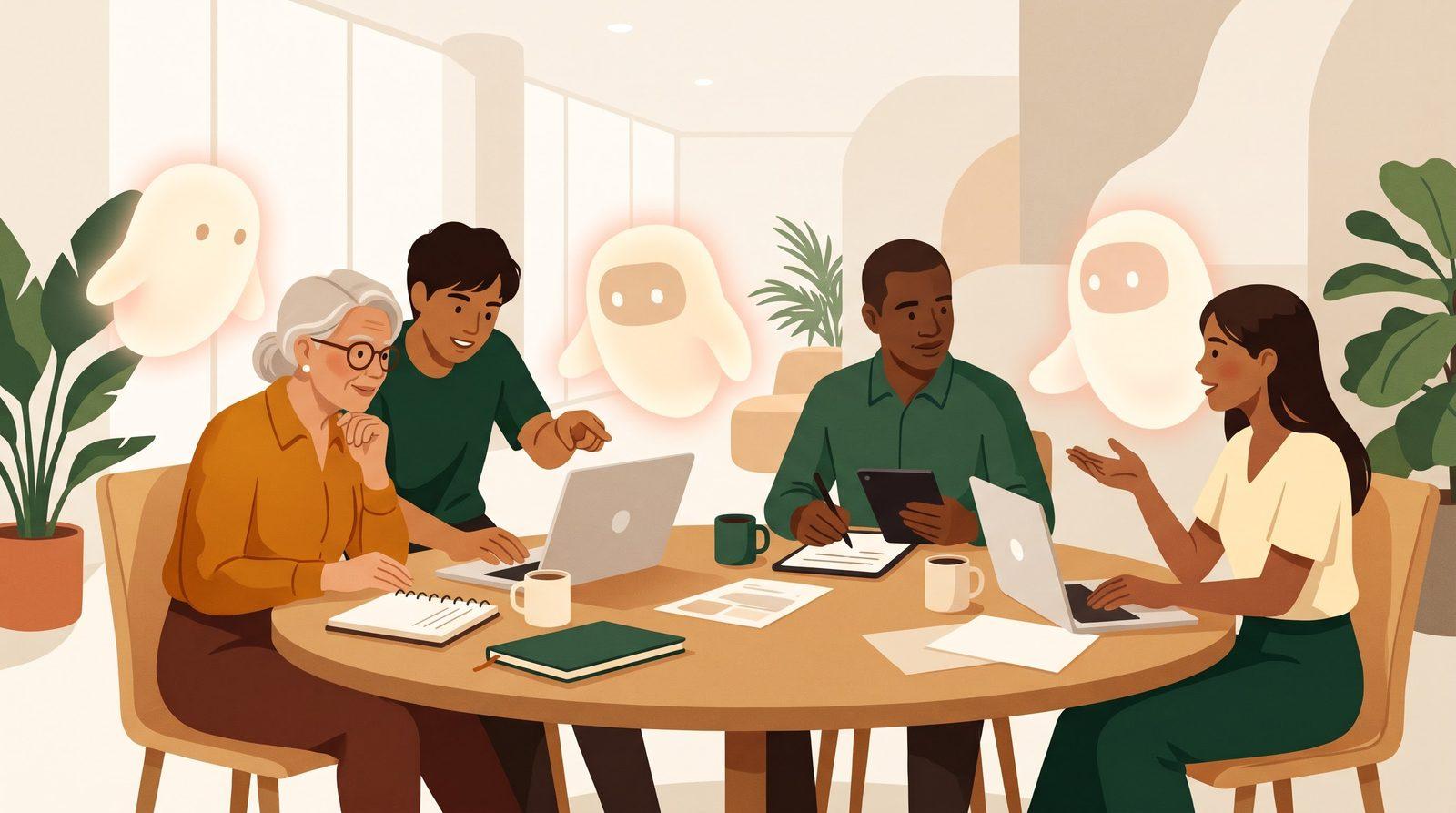
For most of my career, leading a team meant leading people. Developers, testers, analysts, product managers. Some were in the next cubicle, some were three time zones away, but every one of them was a person.
That's changing. These days a good share of my own work runs through AI agents. They research, draft, summarize and write code, and I review what they hand back. And I'm far from alone. In Microsoft's 2025 Work Trend Index, leaders said they expect their teams to be training (41%) and managing (36%) AI agents within five years. Microsoft has even coined a name for the new job description: the "agent boss," someone who "builds, delegates to and manages agents."
So the question isn't whether your team will include agents. It's whether you'll lead that mix on purpose or let it happen to you.
After 30+ years in product-side R&D, here's what I've come to believe: the tools are new, but the leadership isn't. The fundamentals still hold. You just have to be much clearer about which parts of the job belong to people and which parts you can hand to a machine.
What a Hybrid Team Really Is
A hybrid team used to mean some people in the office and some at home. Now it can mean some teammates are people and some are software.
It helps to be honest about what an agent is. The best way I've found to think about one is as a brilliant, tireless, very literal new hire. It works fast, it never gets offended by feedback, and it will happily do the same task a thousand times. It also has no stake in the outcome, no memory of why last quarter went sideways (unless you give it one), and no relationships with your customers or your team.
That last part matters most. Agents can do work. They can't own it.
What Stays Human
1. Trust
People don't follow org charts. They follow people they trust. No agent is going to build that for you.
When agents show up on a team, the first thing people wonder isn't "How does this work?" It's "Is this replacing me?" If you don't answer that question, the rumor mill will answer it for you. Be straight with your team about what you're automating, why, and what it means for their roles. If you don't know yet, say that too. An honest "I don't know yet, and I'll tell you when I do" builds more trust than a polished non-answer.
Application: Before you roll out an agent, tell your team what it will do, what it won't do, and how it changes their work. Then invite their questions.
2. Judgment and Accountability
There's a slide that circulates online, reportedly from an internal IBM training in 1979, that says: "A computer can never be held accountable. Therefore a computer must never make a management decision." Nobody's been able to confirm the original, but the point has aged remarkably well.
An agent can recommend. A person decides. If an agent's work goes out the door with a mistake in it, "the AI did it" is not an answer your customer, your boss or your team will accept, and it shouldn't be. Every piece of agent work needs a named human who owns it.
The same goes for the calls that involve people: hiring, performance, promotions, conflict, anything with a customer relationship on the line. Agents can help you prepare. They can't carry the weight of the decision.
Application: For every agent your team uses, name the person who owns its output. One name, not "the team."
3. Growth
Here's the one that worries me most. A lot of the work agents do well (first drafts, research, summaries, routine code) is exactly the work that taught junior people their craft. I learned how software really works by testing it, line by line, long before anyone let me design it.
If agents take all of the entry-level reps, how does anyone get good enough to check the agents?
The answer isn't to keep agents away from that work. It's to change what the learning looks like. Have newer people review agent output and explain why it's right or wrong. Let them write the briefs. Have them take a task the agent did and do it by hand once, so they understand what "good" looks like. Growth doesn't happen by accident on a hybrid team. You have to design it in.
Application: Pick one task your agents now handle and turn it into a learning rep for someone newer on your team.
What You Hand to Agents
In Delegating Effectively, I wrote that you should delegate outcomes, not just tasks. With agents, that advice gets even more important, because an agent will do exactly what you asked, not what you meant.
Good candidates for agents:
- First drafts. Emails, outlines, reports, proposals.
- Research and summaries. Pulling together what's known before a person decides.
- Repetitive checks. Formatting, consistency, test runs, data cleanup.
- Scaffolding. The boilerplate that has to exist before the interesting work starts.
Things to keep with people:
- Decisions that affect someone's job, pay or growth
- Customer relationships and anything that speaks for your company
- Anything that can't be undone once it's done
- The "why" behind the work
When you hand something to an agent, brief it the way you'd brief a sharp new hire on day one: what the goal is, why it matters, what constraints apply, and what "done" looks like. Vague in, vague out.
I learned this one long before AI. Years ago, when we first offshored our documentation work, I marked up a draft in shorthand, writing <insert content here> wherever I wanted new material. When the updated documents came back, the word "content" had been inserted. Literally. It was exactly what I asked for, and not at all what I wanted.
Agents are the same, only faster. They'll take your shorthand at its word. Say what you mean.
How You Check Their Work
This is where most hybrid teams will get into trouble, and it isn't because the agents are bad. It's because people stop checking.
Researchers have studied this for decades under the name "automation bias." In a 2010 review, Raja Parasuraman and Dietrich Manzey found that over-trusting automated aids shows up in experts as well as beginners, that it "cannot be overcome with simple practice," and that it "cannot be prevented by training or instructions." In other words, you can't just tell people to be careful. When a tool is right nine times in a row, everyone relaxes on the tenth.
So don't rely on willpower. Build the checks into how the team works:
- Match the review to the risk. An internal summary gets a quick read. Anything going to a customer gets a careful one.
- Ask for receipts. Have agents show their sources and their reasoning, so a person can verify instead of just trusting.
- Spot-check the good streaks. The time to look hardest is when it's been right for weeks.
- Make "I found a mistake" a win. If catching an agent's error feels like slowing things down, people will stop doing it. Celebrate the catch.
I'll own this one. Twice I relied on AI-generated work without reviewing it: once a slide deck, and once a requirements document detailing a feature. Both times I was in a hurry and assumed it was right. And both times I had to admit I wasn't sure about several points, because I hadn't written them, and they turned out to be wrong. The AI had simply made them up.
Fool me twice, and all that. Now I read everything an agent hands me before I use it, because I own the output.
Application: Write down your team's review rule for agent work in one sentence, so everyone knows what "checked" means.
Let the Youngest Teach
Back in 2021, I wrote about managing multiple generations and how each one brings something different to a team. That's never been more useful than it is right now.
Many of the people newest to the workforce grew up with these tools. They'll often try an AI tool on a problem before a more seasoned person would even think to. That's a real advantage, and smart leaders will use it.
This isn't a new idea. Harvard Business School's Working Knowledge recounts how Jack Welch, sensing that GE's senior executives weren't making full use of personal computing and the internet, found a young mentor of his own and then "suggested" his senior leaders find fellow employees under 25 to help them learn. It became one of the best-known examples of what's now called reverse mentoring.
The hybrid team is the perfect place to bring it back. Pair someone fluent with the tools with someone who has years of judgment about customers, quality and consequences. One knows how to get the agent to do the work. The other knows whether the work is any good. Each one makes the other better.
A word of caution: don't assume. Not every 24-year-old is an AI expert, and plenty of people with decades in the field are deep into it. Find out who on your team has the skill, whatever their age, and give them a chance to teach.
Application: Ask your team who's using AI tools in a way that's saving them time. Have that person show the rest of the team, and give them credit for it.
How to Start This Week
- List what your team does. Mark what an agent could draft, what a person must decide, and what a person must own.
- Start with one agent and one owner. Don't automate everything at once.
- Write the brief like a job description. Goal, context, constraints, what done looks like.
- Set your review rule before the first output comes back.
- Turn one agent task into a learning rep for someone newer.
- Set up one reverse-mentoring pair.
- Talk about it openly. Tell your team what's changing and why, and keep that conversation going.
Example Script
When you introduce agents to your team:
"We're going to start using AI agents for some of our first drafts and research. Here's what that means: they'll do the first pass, and a person on this team will always own and check what goes out. This isn't about replacing anyone. It's about getting the repetitive work off your plate so you can spend more time on the work that needs your judgment. I want to hear what worries you about it, and I want to hear your ideas for where it could help."
Bottom Line
Leading a hybrid team isn't a whole new discipline. It's the same leadership you've always practiced, with the lines drawn more clearly. Agents can take on more and more of the work. They can't take on the trust, the judgment or the growth. That part is still yours, and it matters more now, not less.
My takeaway: Let the agents do the work they're good at, so your people can do the work only people can do.
Hand off the tasks. Keep the ownership. Grow your people.
Sources
- Harvard Business School Working Knowledge. Is it time for more reverse mentoring? hbswk.hbs.edu.
- Microsoft (2025, April 23). The 2025 Annual Work Trend Index: The Frontier Firm is born. Official Microsoft Blog.
- Parasuraman, R., & Manzey, D. H. (2010). Complacency and bias in human use of automation: An attentional integration. Human Factors, 52(3), 381–410.
- Willison, S. (2025, February 3). A computer can never be held accountable. simonwillison.net.
More in Lead
Coaching vs. Managing: When to Direct, Coach, Delegate, or Support Based on Team Maturity
When I first climbed the ranks from individual contributor to manager, I was learning on the fly and stumbling daily. Looking back, a big part of why was that...
By Todd Bilodeau · Jun 1, 2025 · 4 min read

Delegating Effectively: A New Manager’s Superpower
If you're a new manager, you might be tempted to do everything yourself to make sure it's "done right." But here's the truth: trying to do it all doesn't make...
By Todd Bilodeau · Jun 1, 2025 · 4 min read

How to Build Instant Credibility With a Team You Inherited
Walking into a team you didn't hire, and who didn't choose you, can feel like stepping into a minefield. They've got routines, relationships, and maybe even...
By Todd Bilodeau · May 27, 2025 · 4 min read